

At this time of year, the sun sets earlier and your eyes have to work a little harder to keep up. That’s why we’re encouraging drivers to give their vision a quick check, as glare, poor weather and darker evenings can make driving feel different, even if your eyesight seems fine day to day.
A recent study by Direct Line suggests more than a million UK drivers may be on the road with eyesight below the legal standard. With visibility reducing in the colder months, making sure your eyesight is up to scratch has never been more important.
Why your eyes struggle more on dark roads
Winter not only makes roads darker, earlier but also introduces weather conditions which can also impact how your eyes perceive light. At night, your eyes have to adapt to low light with the added challenge of sudden bursts of brightness from headlights.
The truth about LED headlights
If you feel like headlights have become harsher, then you’re right. Previous research from the Transport Research Laboratory (TRL) found that a vast majority of drivers (97%) are regularly or sometimes dazzled by oncoming lights, with 96% believing many headlights are simply too bright. This discomfort is so significant that one in three drivers now limit or actively avoid driving at night due to the glare.
The increasing issue with Modern LED headlights is that they are brighter than old halogen bulbs, emitting blue-white light that can cause issues for drivers. A dirty windscreen can also make LED glare even worse, reducing visibility and making it harder for tired eyes to focus, as they take longer to recover from sudden brightness.
This issue has become so widespread that the government has recently announced a review into headlight brightness after a surge of safety complaints.
“Reduced daylight, poor weather and intense glare from modern LED headlights can make driving conditions trickier for many people”, comments our Sales and Marketing Director, Tim Alcock. “LED headlights emit bright blue-white light that scatters more easily in the eye, causing glare, halos and starbursts, especially for anyone with an underlying eye condition. Drivers need to understand how winter makes these issues worse and take simple steps to protect their vision before heading out in the dark.”
What drivers with different eye conditions actually see
When visibility drops, symptoms of common eye conditions can become much harder to ignore.
To help people understand the impact, we’ve visualised how each condition looks to different drivers to show how it could affect your view of the road:
Dry Eye Disease
Dry eye is extremely common, with the BMJ reporting between 10% and 30% of adults experience dry eye symptoms. The condition becomes more common with age, meaning it’s more likely to affect older drivers.
Car heaters, cold air and reduced blinking during night driving can make your eyes feel gritty or sore and can worsen glare.
What helps:
- Keep vents facing away from your face
. - Lower your fan speed
. - Stay hydrated
. - Keep your windscreen spotless
.
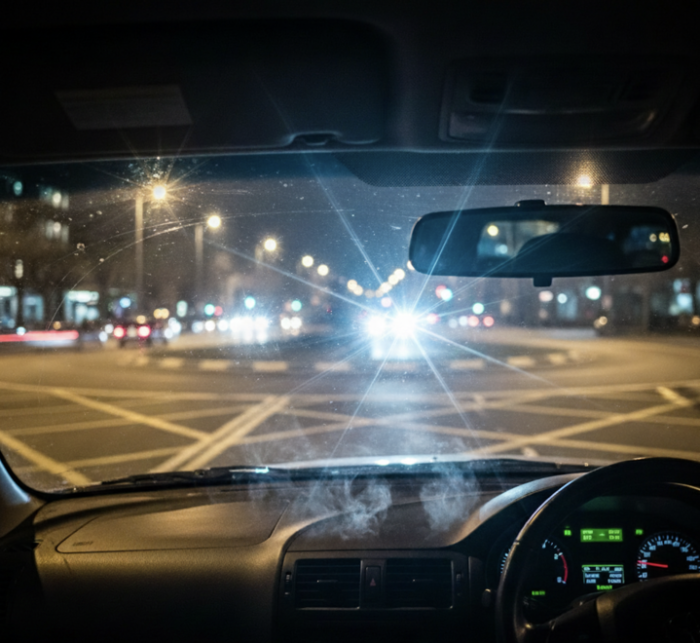
Dry Eye Syndrome: Blurred vision & intense glare
Cataracts
According to the Royal National Institute of Blind People, 30% of people over 65 have cataracts in one or both eyes. Cataracts cause cloudy vision, glare, and halos around lights. Wet winter roads and LED headlights make these symptoms significantly worse.
What helps:
- Limit or avoid night driving if glare is severe
. - Keep your windscreen clean to minimise scatter
. - Look slightly down and left when dazzled by oncoming headlights
.
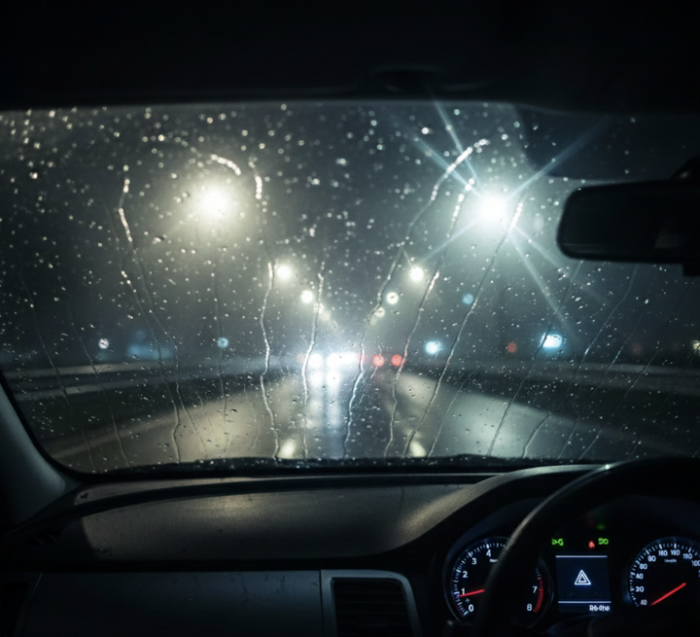
Cataracts: Severe glare & halos in heavy weather
Glaucoma
According to the Royal College of Ophthalmologists, Glaucoma is said to affect over 700,000 people in the UK and is a leading cause of preventable sight loss. It reduces peripheral (side) vision, which makes spotting cyclists, pedestrians or vehicles approaching from the side much harder in low light.
What helps:
- Turn your head to double-check blind spots
. - Avoid fast lane changes
. - Get regular field-of-vision tests
.
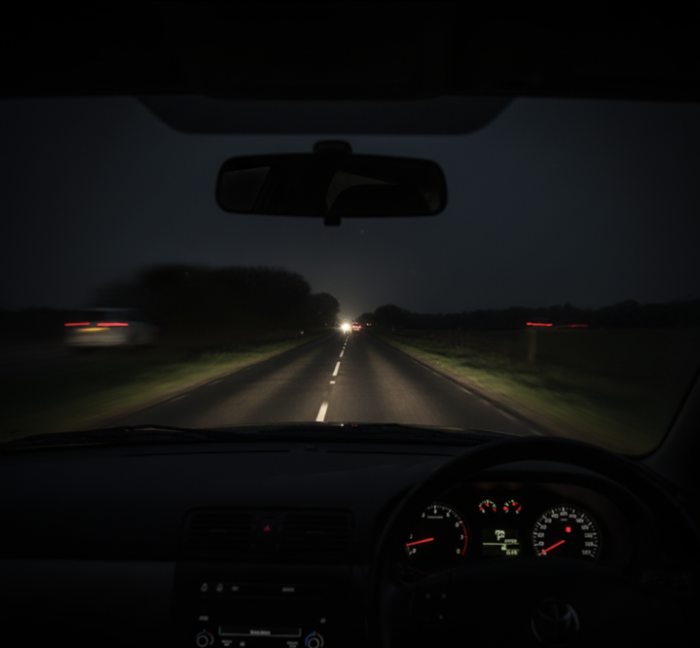
Glaucoma: Dangerous “tunnel vision” at night
Night myopia (night-time near-sightedness)
Night myopia causes distance vision to blur in low light, even if your eyesight feels normal during the day. Myopia is widespread across the UK and affects up to one in three people, according to University College London. For those affected, rRoad signs, lane markings and hazards can appear less sharp, making driving in winter more difficult.
What helps:
- Get your eyes tested
. - Wear clean, accurate glasses or contact lenses
. - Focus on the road surface ahead rather than into distant darkness
. - Take breaks on longer journeys to reduce eye strain
.
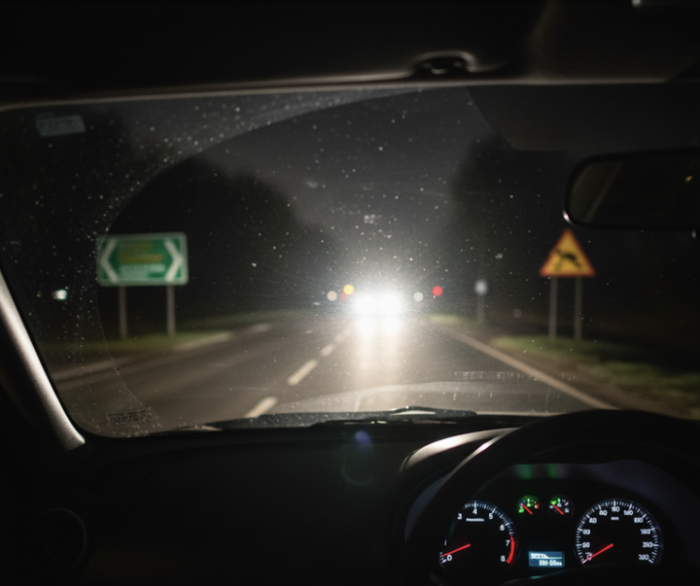
Night Myopia: Blurred distant vision & hazards
Diabetic retinopathy
This condition reportedly affects up to 28% of people with diabetes, according to Diabetes UK. It can cause blurred patches, dark spots or floaters – symptoms that make night driving in rain or spray much more dangerous.
What helps:
- Keep blood sugar well-controlled
. - Attend all diabetic eye screening appointments
. - Stop driving immediately if you notice sudden changes
.

Diabetic Retinopathy: Dark spots & blurred vision in rain
Age-related macular degeneration (AMD)
AMD affects around 700,000 people in the UK and is mainly found in those over 55, according to Macular Society. It impacts central vision, making it harder to read signs, see hazards directly ahead or recognise traffic lights, especially in low contrast conditions.
What helps:
- Get regular eye checks
. - Avoid driving in darkness or poor weather if central vision is affected
. - Use routes with good lighting
.
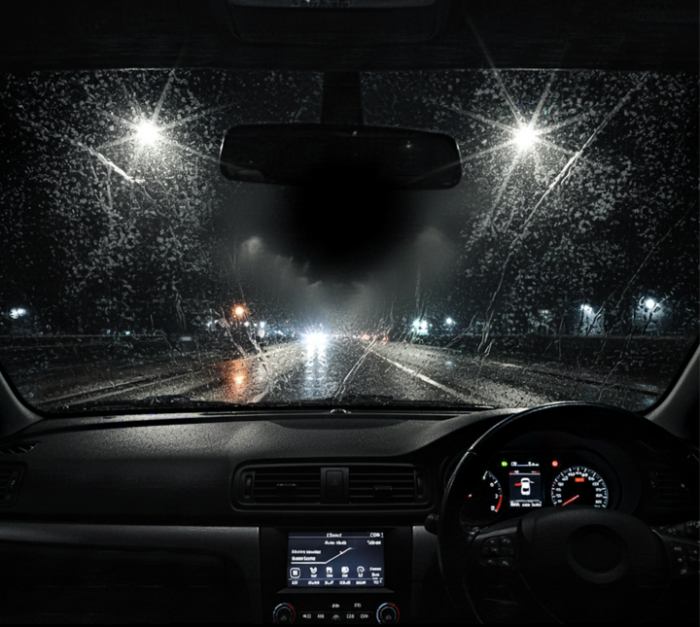
Age-related Macular Degeneration (AMD): Central blind spots & poor contrast
What’s the legal eyesight standard for driving?
Good vision isn’t just helpful for driving, it’s a legal requirement.
According to the DVLA, all drivers must be able to:
- Read a car number plate from 20 metres (with glasses or contact lenses if needed)
. - Have an adequate field of vision
. - Have no untreated double vision
.
There’s no automatic re-test after you pass your driving test, meaning it’s your responsibility to make sure you still meet the standard.
The eye conditions that can affect your driving licence
Certain eye conditions must legally be reported to the DVLA if they could affect your ability to drive safely. These include glaucoma affecting both eyes, severe cataracts, diplopia (double vision), retinitis pigmentosa and night blindness (nyctalopia).
If you don’t report a condition that affects your ability to drive safely, you could get a fine of up to £1,000.
The winter driving checks that can protect your eyesight
We’ve created a list of simple checks that can help keep your vision sharp and your journeys safer:
- Book an eye test if anything feels ‘off’
If you’ve noticed more glare, slower focus or difficulty seeing road signs, don’t wait. Most adults should have an eye test every two years, so make sure you’re up to date on appointments to keep track of any changes to your vision. - Know the DVLA vision rules for your condition
If you have glaucoma, AMD, diabetes, cataracts or night blindness, you need to report your condition to the DVLA. Not reporting these conditions could lead to significant financial and legal penalties, which could also invalidate your insurance. - Clean your windscreen, mirrors and headlights
Dirt and grime act as diffusers, scattering intense LED light and dramatically increasing the effect of glare from oncoming vehicles, making it important to keep mirrors, headlights and windscreens clean. You should also keep the inside of your windscreen clean, as removing the oily film makes a huge difference in minimises light scattering at night. - Turn down dashboard brightness
Bright displays can stop your eyes adjusting to the dark and make it harder to see at night. Lower the brightness on your dashboard so your vision naturally adapts to sudden headlights and changing road conditions. - Adjust your seating and mirrors to reduce glare
Raising your seat slightly and angling mirrors downwards can help reduce risk of glare, alongside trying to avoid looking directly into headlights whilst driving. - Stick to well-lit routes where possible
Street lighting reduces glare, improves contrast and helps you see pedestrians sooner. If you can, plan to stick to these better-lit routes to reduce strain on your eyes throughout your journey.
Can certain eyesight conditions affect my car lease?
While your eyesight condition itself will not change the terms of your lease agreement, drivers need to be fully aware that any condition affecting your legal ability to drive could lead to a required licence revocation by the DVLA. If this occurs, it will mean you have to initiate an early termination of your lease, which may involve paying an early termination fee. We strongly encourage all customers to regularly check the DVLA’s visual requirements and research in advance, where possible. Customers can always contact our support team to discuss any changes that might affect driving ability to get further advice.
Winter driving can be challenging, but taking care and planning ahead can help you avoid discomfort and risk. If you’re struggling with glare, eye strain or visibility at night, it may be a sign your eyesight needs attention.
For more tips and advice, take a look at our winter driving advice blog.