

Electric vehicles (EVs) have come a long way over the past 10 years, with the market seeing a rapid transformation. With the ban on petrol and diesel cars edging closer, EVs are changing the way we drive, allowing us to make greener journeys.
Since 2008, brands like Tesla, Nissan and Renault have been leading the way, with rapid technological advancements. Longer ranges, improved performance, and stylish new designs have helped to make electric vehicles a more appealing option to drivers.
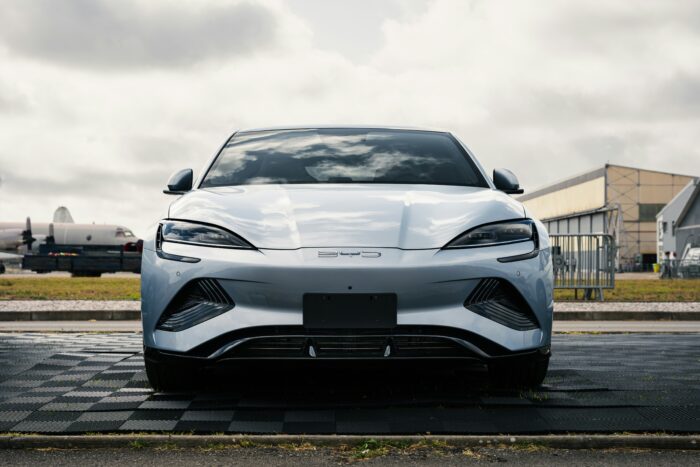
We’re now seeing the next phase of the EV revolution. A surge of Chinese manufacturers is entering the market, offering competitive prices and technology-led models that challenge some of the long-established brands, making electric cars more accessible than ever before.
The expansion of the Chinese EV market
The first Chinese electric vehicle to be introduced in the UK was the MG ZS EV in 2019. Since then, we’ve seen an influx of new brands entering the market, including BYD, GMW and Maxus. According to Car Magazine, 30% of all EVs sold in the UK are Chinese.
We recently crunched the numbers on the latest UK vehicle registration data and found that Chinese brands now account for around 8% of all licensed plug-in cars in the UK, which is up from 2.7% in 2021. This means they’ve almost tripled their market share in just four years.
- BYD Seal U Design EV (PHEV) is seeing the most growth, with a staggering 28,581% increase in registrations year-on-year, rising from 58 units in 2024 to 16,635 in 2025.
- [TG2]
| Ranking | Make | GenModel | Type | Total registrations (Q3 2025) |
| 1 | MG | MG 4 | Battery electric | 45,621 |
| 2 | MG | MG ZS | Battery electric | 29,329 |
| 3 | BYD | BYD Seal U Design EV | Plug-in hybrid electric (petrol) | 16,635 |
| 4 | MG | MG HS | Plug-in hybrid electric (petrol) | 16,536 |
| 5 | MG | MG 5 | Battery electric | 15,314 |
| 6 | Jaecoo | Jaecoo 7 Luxury 4X4 Auto | Plug-in hybrid electric (petrol) | 12,651 |
| 7 | BYD | BYD Seal Design EV | Battery electric | 12,187 |
| 8 | BYD | BYD Atto 3 | Battery electric | 8,265 |
| 9 | OMODA | Omoda E5 Comfort | Battery electric | 5,231 |
| 10 | MG | MGS5 EV | Battery electric | 3,303 |
What’s driving Chinese EV growth in the UK
While Chinese car manufacturers were initially met with some scepticism in the UK, many have since become household names, earning the trust of consumers.
The surge of Chinese brands entering the UK market is making electric cars more accessible to drivers. Particularly those who previously believed that electric cars were out of their price range.
But it’s not just the competitive price points that are driving the popularity of these cars. As well as often being more affordable, many of these models also offer the same, or in some cases more advanced, technology than some heritage brand models.
One tech feature that Chinese EV cars are being praised for is their unmatched charging capabilities. The 007 Zeekr, for example, claims to be one of the fastest-charging mainstream EVs in the world. The Chinese car market is also commended for its capable battery technology, advanced software and desirable internal systems.
A look at the current EV market in the UK
Whilst it’s fair to say that Chinese brands are seeing substantial growth in the UK, the electric vehicle market continues to grow steadily. According to recent figures, there are now more than 1.9 million fully electric cars on UK roads.
There’s no surprise that Tesla is the best-selling EV manufacturer to date in the UK. According to the latest registration data, there are now more than 129,404 Tesla Model 3 units on the road. This was closely followed by the Tesla Model Y, with 120,326 units and the Nissan Leaf, with more than 61,506 units.
| Ranking | Make | GenModel | Type | Total registrations (Q3 2025) |
| 1 | Tesla | Tesla Model 3 | Battery electric | 129,404 |
| 2 | Tesla | Tesla Model Y | Battery electric | 120,326 |
| 3 | Nissan | Nissan Leaf | Battery electric | 61,506 |
| 4 | Audi | Audi Q4 | Battery electric | 54,491 |
| 5 | BMW | BMW 3 Series | Plug-in hybrid electric (petrol) | 54,378 |
| 6 | Kia | Kia Niro | Battery electric | 48,100 |
| 7 | Volkswagen | Volkswagen ID3 | Battery electric | 47,672 |
| 8 | Ford | Ford Kuga | Plug-in hybrid electric (petrol) | 46,966 |
| 9 | Mitsubishi | Mitsubishi Outlander | Plug-in hybrid electric (petrol) | 46,499 |
| 10 | MG | MG 4 | Battery electric | 45,621 |
The case for switching to electric
Transport accounts for nearly a third of the UK’s greenhouse gas emissions, so switching to electric is no longer just a ‘green’ choice, it’s also essential.
As well as being better for the planet, EVs can be cheaper to run and maintain, smoother to drive and cause less noise pollution. With the UK’s charging network expanding fast, now is a great time to make the switch.
Should you lease a Chinese EV?
Chinese cars are no longer the ‘newcomers’. Over the last few years, Chinese brands have become well-established in the UK car market, offering competitive prices, impressive technology and sophisticated designs.
Leasing a Chinese EV is a great option for drivers seeking a modern, technology-focused electric car at an affordable price that also performs well on the road.
Looking to make the switch to EV? Find out more in our electric vehicle guides and explore our range of electric cars and vans available for lease today.