
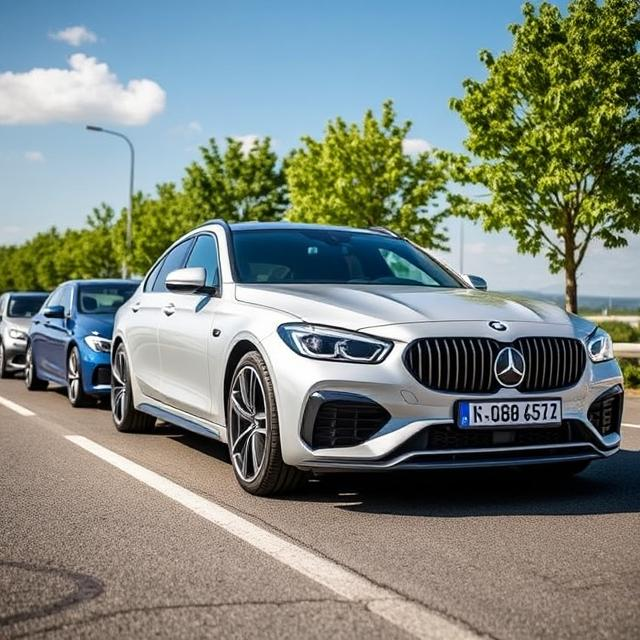
Leasing more than one vehicle: everything you need to know:
Yes — you can lease more than one vehicle.
Whether you’re a sole trader, growing business, or managing a fleet, leasing multiple vehicles is a common and flexible way to run cars or vans without tying up capital.
This guide explains how it works, what to consider, and how to structure multiple leases properly.
Can you lease more than one vehicle?
In most cases, yes. If you are:
A limited company
A partnership
A sole trader
Even an individual (suibject to affordabilty checks)
The key factor isn't the number of vehicles, it's your ability to afford and manage the agreements.
How lenders assess multiple lease applications
When you lease more than one vehicle, finance providers look more closely at:
Credit profile
Business credit history (if applicable)
Personal credit (especially for sole traders)
Affordability
Income vs monthly commitments
Existing finance agreements
Business stability
Trading history
Turnover and cash flow
Taking on multiple leases can affect your credit exposure, but it doesn't automatically prevent approval.
Leasing multiple vehicles vs fleet leasing
These terms are often used interchangeably — but they’re slightly different.
Multiple leases (small scale)
Usually 2-5 vehicles
Often arranged individually
Flexible mix of models
Fleet leasing (larger scale)
5+ vehicles
Structured as a group lease
Often with centralised management
Most businesses start with individual leases and then move towards a fleet setup as they grow.
Why businesses lease more than one vehicle
Lower upfront cost
With no need to buy vehicles outright, capital is freed up for other business purposes: hiring staff, investing in growth and managing cash flow.
Predictable monthly costs
Each vehicle has fixed monthly payments and optional maintenance packages, making budgeting far easier, even for larger vehicle fleets.
No depreciation risks
With a standard business lease you don't need to worry about resale values; just return the vehicles and upgrade to newer models at the end of the contract.
Flexibility as the business grows
You can add vehicles as needed and choose different models for different roles.
Choosing the right vehicles for your needs
When leasing more than one vehicle, it’s rarely one-size-fits-all.
For example:
Sales team: efficient company cars
Site work: vans or pickups
Management: executive vehicles
Popular business vehicles include:
Ford Transit Custom for trades and logistics
Ford Ranger or Toyota Hilux for mixed on/off-road use
Land Rover Defender for specialist roles
Mixing vehicle types is often more efficient than standardising everything. Check our guide on recommended vans for different businesses.
Key decisions when leasing multiple vehicles
Contract length
Typically, 24, 36 or 48 months. Longer terms provide a lower monthly cost whereas shorter terms give more flexibility in changing/upgrading models.
Mileage
Set realistic usage. Underestimating usage will leas to excess charges, and overestimating will lead to unnecessary costs. For high-mileage businesses, planning upfront is essential. Talk to us about setting a custom amount, this can be calculated to your needs, rather than simply capped at a fixed amount.
Maintenance packages
Strongly recommended when running multiple vehicles. This spreads servicing costs and reduces downtime, keeping your fleet on the road.
Insurance and usage
You need to have the correct insurance for your business purpose, and the fleet vehicles need to be assigned to the correct one (business, courier, etc.). See our guide on van insurance specifics.
Tax considerations (VAT)
100% reclaimable on vans if used purely for business
50% reclaimable on cars with 'mixed use'
Reclaiming VAT on fuel is also possible, albeit more complex if any vehicles are driven for both business and private use. Your drivers, if they commute to work, should keep detailed mileage records.
Allowable expenses
Lease costs can usually be offset against taxable profits (subject to CO₂ rules for cars).
Benefit in Kind (BiK)
Applies if employees use vehicles privately:
EVs typically offer lower BiK rates
Important for company car strategies
Always confirm details with your accountant.
What about branding and customisation?
This is where leasing vs buying differs:
Permanent modifications (e.g. paintwork) may be restricted
Temporary branding (e.g. wraps) is usually acceptable
End of contract: what happens?
Each vehicle is inspected against fair wear and tear guidelines. All keys, documents and equipment must be returned with the vehicle.
Across multiple vehicles, small issues can add up . . . so driver care matters.
Common mistakes to avoid
Underestimating mileage across multiple vehicles
Taking identical vehicles when needs differ
Ignoring total monthly exposure of leasing costs
Not planning for growth or contract overlap
Is leasing multiple vehicles right for you?
Leasing or outright purchase is major decision and depends largely on the state and needs of your business.
A lease may work better if you:
Want to preserve cash flow
Need flexibility
Prefer predictable, regular costs
Don't want to chance resale fluctuations
Purchase may be more suitable if you:
Need full ownership
Want heavy vehicle customisation
Talk to us about your requirements
No two businesses run the same — and neither should their vehicle setup.
We can help you:
Structure multiple leases properly
Choose the right mix of vehicles
Plan for growth and cost control
Get in touch to discuss your requirements and we’ll tailor a solution that fits your business.