
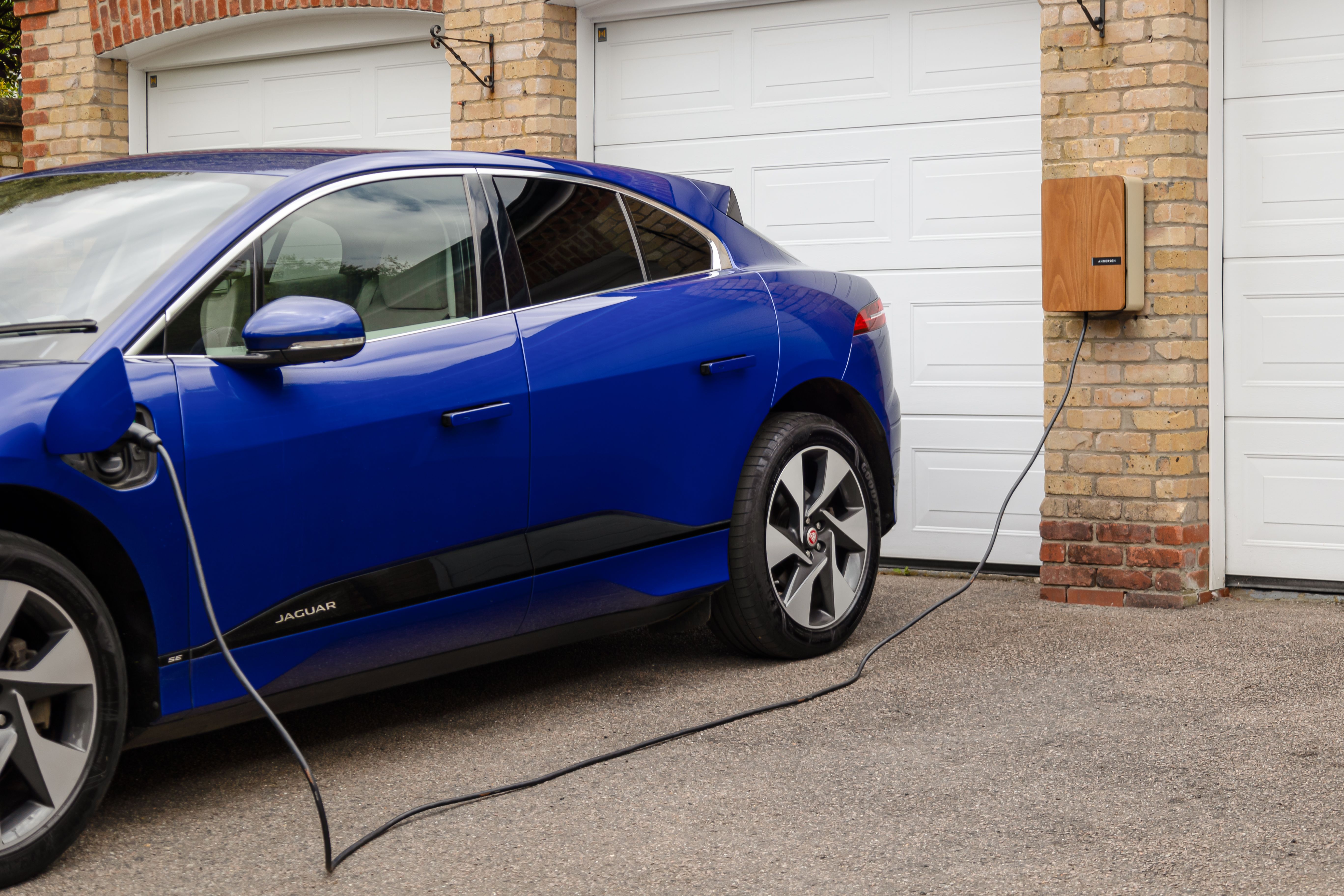
A home EV charger is the single most impactful thing you can do to make living with an electric lease car practical and affordable. Charging overnight at home is the most convenient and typically the lowest-cost way to keep your battery topped up. This guide covers the different types of charger, what installation involves, what grants are available, who qualifies and what to expect on installation day.
Key facts
A 7kW wallbox is the most common home installation and charges most EVs fully overnight
All new home EV chargers installed in the UK must be smart chargers by law (since June 2022)
Government grants are available for some eligible drivers: eligibility rules have changed and the current position should be verified at gov.uk
You do not need to own the car to install a home charger: lease drivers benefit fully and the charger stays with the property
Why home charging makes electric leasing more practical
Starting every day with a full charge
Plugging in at home overnight means your battery is full before you start every morning
No detour to a forecourt or wait at a public charger on your commute
For most urban and suburban drivers, a home charger covers every daily need without visiting a public network
The cost advantage of home charging
Electricity from a home tariff is typically significantly cheaper per kWh than rapid public chargers
Off-peak and EV-specific overnight tariffs, offered by several major UK energy suppliers, reduce the cost per mile further
Smart chargers enable automatic scheduling so the car charges at the cheapest overnight window without any manual input
Home charging and your lease car
The charger is installed at your property: you do not need to own the vehicle to benefit
When you return a lease car and collect the next one, the charger is already in place and ready to use immediately
A home charger installed during one lease contract continues to serve every subsequent EV you drive from that address.
With the growing popularity of EVs, a home charger is fast becoming a key selling point for house buyers, so whilst you can’t take it with you if you move, it has the potential to add value to your home.
Types of home EV charger
There are three ways to charge at home: one requires no installation, one is the standard choice for most homes, and one needs infrastructure the majority of UK properties do not have.
3-pin plug (trickle charging)
EV’s can be charged via a standard 3-pin domestic socket using a supplied cable
Output: approximately 2.3kW (at best); at this rate a typical EV could take 24 hours or more to charge fully
No installation required but not suitable as a primary charging method: prolonged use generates more heat than a dedicated wallbox
Useful as an occasional backup; not recommended for regular overnight charging
7kW wallbox (the standard home installation)
A 7kW wallbox is the most common home EV charger installation in the UK
Charges most EVs from near-empty to full in around 6 to 8 hours: well-suited to overnight charging
Requires professional installation by an OZEV (Office for Zero Emission Vehicles) approved installer
Connects to your home's single-phase electricity supply, which is standard in most UK properties
22kW wallbox (three-phase supply only)
A 22kW charger charges significantly faster than a 7kW unit but requires a three-phase electricity supply
The vast majority of UK homes have single-phase supply: three-phase is found mainly in commercial properties and some newer builds
Unless you have confirmed three-phase supply, a 7kW wallbox is the practical and correct choice
Smart chargers: a legal requirement since June 2022
Since June 2022, all new home EV chargers installed in the UK must be smart chargers by law
A smart charger communicates with the electricity grid, can be scheduled via an app and responds to time-of-use tariff signals
Smart scheduling automatically moves charging to the cheapest overnight window, reducing running costs without driver involvement
There is no option to install a non-smart charger at home as a new installation: the legal requirement applies universally
For more on managing your EV day to day, see our guide to driving an electric vehicle

How much does a home EV charger cost?
The total cost covers two components: the hardware and the installation. Both vary depending on your circumstances.
Hardware costs
A 7kW smart wallbox typically costs several hundred pounds for the unit alone
Prices vary significantly between brands and specification levels: basic units are less expensive than models with premium apps, solar integration or vehicle-to-grid capability
Well-known brands include Ohme, Zappi, Andersen and Wallbox: your installer will advise on compatibility with your specific vehicle and energy tariff
Installation costs
Installation cost depends primarily on the distance between the charger location and your consumer unit (fuse box), and the complexity of the cable run
A straightforward installation close to the consumer unit with a simple cable run costs less than one requiring routing through walls, underground or across a longer distance
Always request a written quote itemising hardware and installation separately before any work begins
Total cost expectations and current figures
Combined hardware and installation costs currently run between (approx.) £1100 and £2100 for a standard 7kW installation – depending on your individual circumstances and requirements
Applicable government grants reduce the net cost for eligible drivers (see the grants section below)
Grants and financial support
Government financial support for home EV chargers exists in the UK, but eligibility rules are narrower than many drivers expect.
The OZEV EV Chargepoint Grant
The UK government's OZEV (Office for Zero Emission Vehicles) EV Chargepoint Grant provides financial support toward the cost of a home charger
The grant is applied by your approved installer on your behalf: you do not apply to the government directly
The grant can only be used with OZEV-approved installers and for approved smart charger models
Grant amounts and eligibility rules change: always verify the current position at Electric vehicle chargepoint grants - GOV.UK before assuming you qualify
Who is currently eligible
Homeowners in houses with private off-street parking are no longer eligible for the residential EV Chargepoint Grant. Homeowners with on-street parking only are currently eligible.
Renters in residential properties are currently eligible, subject to landlord consent
Flat owners (owner-occupier) are currently eligible
Social housing tenants may be eligible under separate provisions
If the charger will be used for a company or lease car, ask your installer about the Workplace Charging Scheme as an alternative route
All eligibility is subject to the current rules: verify at Electric vehicle chargepoint grants - GOV.UK before proceeding
What the grant does not cover
The grant is a contribution toward cost, not full payment: a co-payment is always required
Non-smart chargers are not eligible: the grant and the smart charger legal requirement align
Replacement or upgrade of an existing charger may not qualify under all circumstances

What you need at home before installation
Consider these five things before booking an installer.
Off-street parking: for this solution, the charger must be installed where you can park and connect the cable; a driveway, garage or private parking space is required.
On-street parking: you may be able to install a cross-pavement solution, for example a charging gully. See further details in our on-street parking section below
Electricity supply: your installer will assess your consumer unit during the survey; most modern homes have adequate supply for a 7kW charger without upgrade
Cable run: the further the charger is from your consumer unit, the more cable and labour is involved; discuss placement before quoting
Landlord consent: if you rent, you will need written consent from your landlord before installation; this is also required for the grant application in most cases
What if I only have on-street parking?
A traditional home wallbox is not feasible on its own with on-street parking: running a cable across a public pavement is not permitted, however, cross pavement charging solutions are becoming more common. Read the latest .gov guidance here and information on on-street parking EV Chargepoint grant eligibility here
Some local authorities are beginning to install pavement-mounted or on-street charging units for residents without off-street access: check with your local council
In the meantime, public charging networks and workplace charging are the primary alternatives for on-street parkers
This is a genuine practical constraint worth factoring into your decision before committing to an electric lease
The installation process: what to expect on the day
A standard home EV charger installation typically takes between two and four hours from start to finish.
Step 1: choose an OZEV-approved installer. Only approved installers can apply for the government grant on your behalf.
Step 2: site survey. Many installers offer a free survey (in person or via photos and video) to assess your electricity supply, consumer unit, cable run and proposed charger location.
Step 3: written quote. The quote should itemise hardware, installation labour and any additional work such as consumer unit upgrades or complex cable routing.
Step 4: grant application. If you are eligible, your installer submits the grant application on your behalf before the installation. If your application is approved, your installer claims the grant on your behalf after installation is completed.
Step 5: installation day. The installer mounts the unit, runs the cable, connects to the consumer unit and tests the full system.
Step 6: DNO notification. Your installer notifies your Distribution Network Operator (DNO) if required, typically for chargers above a certain output level. This is the installer's responsibility, not yours.
Step 7: handover. The installer demonstrates the unit, sets up the app connection and confirms the charging schedule is working correctly.
LeaseCar partners with PodPoint
LeaseCar has partnered with Pod to offer our customers great discounts and affordable options for installing a home charge point. There are no inclusive miles, it works with both single-rate and dual-rate energy tariffs, and some of the key benefits and features include:
£50 off the RRP
Choice of either a tethered or untethered charger
5-year warranty
Scheduled charging for when it's cheapest
Standard installation
2p cashback per kWh smart charged, which offers up to £100 per year, although rewards are not capped and can continue to accumulate over time
Learn more about our partnership with Pod and how you can benefit today by visiting our electric vehicle home charging page

Frequently asked questions
How much does it cost to install an EV charger at home in the UK?
How much does it cost to install an EV charger at home in the UK?
The combined hardware and installation cost for a standard 7kW smart wallbox typically currently run between (approx.) £1100 and £2100 for a standard 7kW installation – depending on your individual circumstances and requirements. Costs vary based on the complexity of the cable run, whether your consumer unit needs upgrading and the brand of charger chosen. Government grants may reduce costs for eligible drivers, check Electric vehicle chargepoint grants - GOV.UK for full details.
Do I need a smart charger for my EV?
Do I need a smart charger for my EV?
Yes. Since June 2022, all new home EV chargers installed in the UK are legally required to be smart chargers. A smart charger can communicate with the electricity grid, be controlled via a smartphone app and schedule charging automatically to take advantage of cheaper off-peak electricity tariffs. Non-smart chargers cannot legally be installed as new home units.
Can I get a grant for a home EV charger in the UK?
Can I get a grant for a home EV charger in the UK?
Government grants are available under the OZEV EV Chargepoint Grant scheme but eligibility has narrowed since April 2022. Homeowners in houses with off-street parking are no longer eligible for the residential grant. Currently homeowners with on-street parking can be eligible, depending on local regulations, see further details at Electric Vehicle Chargepoint Grant for Households with On-Street Parking - GOV-UK Find a grant. Renters in residential properties and flat owners are currently eligible, subject to conditions. Grant amounts and eligibility rules change: verify the current position at Electric vehicle chargepoint grants - GOV.UK before assuming you qualify.
How long does it take to charge an EV at home?
How long does it take to charge an EV at home?
Charging time depends on the charger output and the car's battery size. A 7kW wallbox, the most common UK home installation, charges most EVs from near-empty to full in around 6 to 8 hours, making overnight charging the natural approach. A 3-pin plug at approximately 2.3kW charges at roughly a third of that speed and is only practical for occasional use. Most drivers schedule overnight charging to coincide with the cheapest off-peak electricity window.
Can I install a home charger if I lease rather than own the car?
Can I install a home charger if I lease rather than own the car?
Yes. The charger is installed at your property and stays there when you return the lease car. When you collect your next lease vehicle, the charger is already in place and ready to use. A home charger installed during one lease contract benefits every subsequent EV you drive from that address.
What if I live in a flat or rent my home?
What if I live in a flat or rent my home?
Flat owners and renters may be eligible for the OZEV EV Chargepoint Grant, which is currently not available to homeowners in houses with off-street parking. Renters typically need written landlord consent before installation. Flat installations may face additional practical challenges around cable routing and communal electricity supply. Check current eligibility rules at and discuss your specific situation with an approved installer.
What if I only have on-street parking?
What if I only have on-street parking?
A traditional home wallbox is not feasible on its own with on-street parking: running a cable across a public pavement is not permitted, however, cross pavement charging solutions are becoming more common, and in some circumstances grants are available – check the full details here Electric vehicle chargepoint grants - GOV.UK. Check with your local council regarding the rules in your local area.
Ready to lease an electric car?
A home charger transforms the EV leasing experience. Browse LeaseCar's full electric range or speak to the team, open Monday to Friday, 8:45am to 5:30pm.
Hot offers | Call 0344 745 1818