
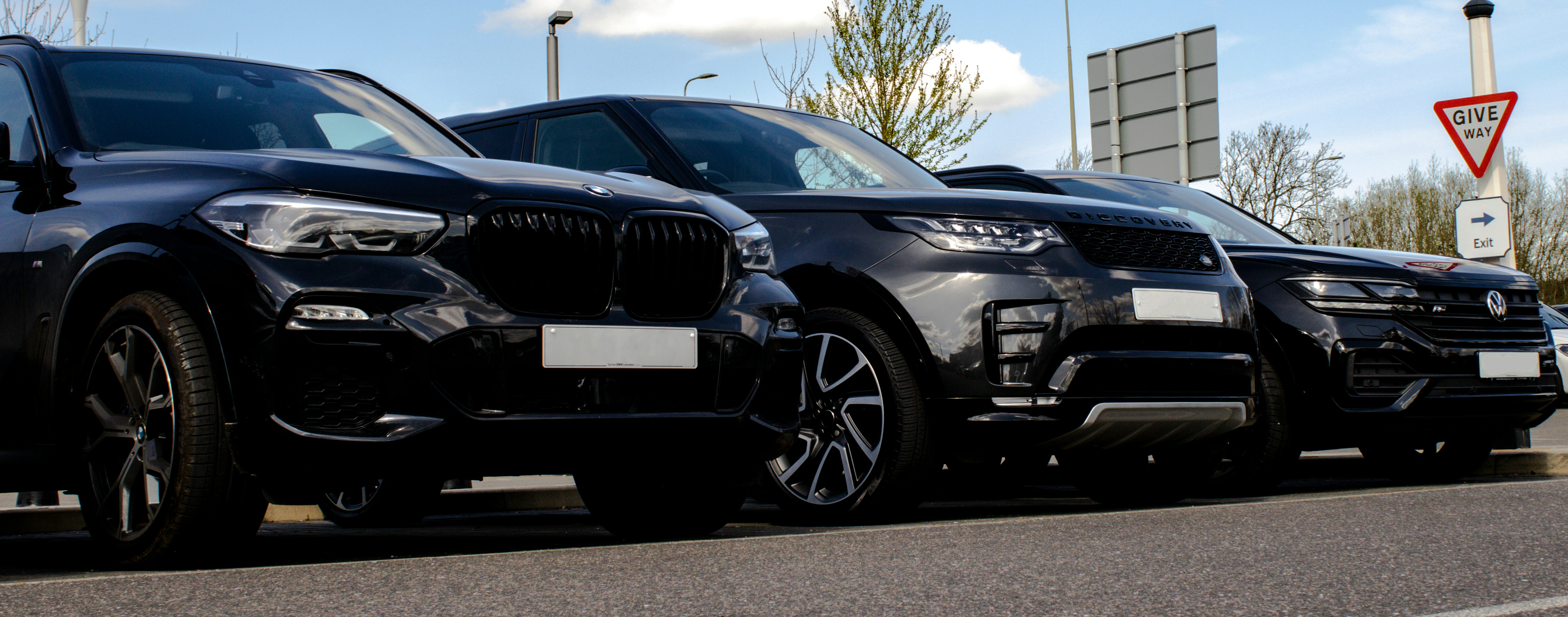
For most businesses, vehicles are a significant operational cost and a management overhead. Whether you run two company cars or a fleet of thirty, the decision to lease rather than buy affects your cash flow, your tax position, your budgeting and the time your team spends managing vehicle administration. This guide sets out the benefits leasing can bring a business compared to purchasing: what fleet leasing involves, how it compares to purchasing, and what LeaseCar can offer businesses of any size.
Key facts
Business Contract Hire (BCH) is the most widely used fleet leasing product in the UK: fixed monthly payments, no residual value risk, no disposal overhead
VAT-registered businesses can typically reclaim 50% of the VAT on car lease finance payments and 100% on maintenance — verify your specific position with your accountant
Lease payments on business cars are generally deductible as a business expense for corporation tax, subject to CO2-related restrictions
Fully electric company cars attract a 4% BiK rate in 2026/27: significantly below petrol equivalents — verify current rates at hmrc.gov.uk as these change annually
Leasing vs buying: the honest financial comparison
The upfront purchase price is only one element of the true cost of owning a fleet vehicle outright.
The true cost of buying a fleet vehicle
Purchase price is the visible cost; depreciation, maintenance, disposal and staff time are the less obvious ones
A new car typically loses 20 to 35% of its value in the first year: a business that buys a fleet absorbs this loss directly
Selling or disposing of vehicles when they are no longer needed adds administrative overhead and rarely recovers full market value
Capital tied up in depreciating assets is capital that cannot be deployed in the core business
The leasing advantage: predictability and capital preservation
Monthly lease payments are fixed for the contract term: no surprise costs, no exposure to residual value movements
Working capital is preserved for core business operations, investment or growth rather than sitting in vehicle assets
No vehicle disposal process: hand the vehicle back at contract end and move on
Accounting treatment varies by business size and reporting standard: discuss the correct approach with your accountant
Whole-life cost: the right comparison
The correct comparison for a fleet decision is total cost of ownership versus total cost of leasing over the same period
Total cost of ownership for a purchased vehicle includes: depreciation, finance cost if bought on credit, servicing and maintenance, tyres, administration time and disposal costs
For most business use cases, this comparison favours leasing for vehicles held for 3 to 4 years
Business car leasing: is it right for you? | Leasing more than one vehicle
Tax efficiency: what business leasing means for your finances
Three tax areas where business leasing has a clear advantage over purchasing. The rules are complex and change annually: verify your specific position with a qualified accountant or at hmrc.gov.uk.
Corporation tax: lease payments as a business expense
Monthly Business Contract Hire payments are generally deductible as a business expense against corporation tax
For cars with CO2 emissions of 50g/km or below, including all fully electric vehicles, 100% of the lease cost is deductible
For cars with CO2 emissions above 50g/km, a 15% restriction applies: only 85% of the lease cost is deductible
When purchasing outright, businesses instead claim capital allowances, which is a slower and more complex process for obtaining tax relief
Verify your specific position at gov.uk and with your accountant
VAT reclaim on leased vehicles
VAT-registered businesses can typically reclaim 50% of the VAT on Business Contract Hire finance payments for cars available for any private use
100% VAT reclaim is available on maintenance costs under a maintained lease
For vehicles with genuinely no private use, 100% reclaim on finance may apply, but HMRC applies a stringent test and this position is difficult to sustain in practice for most cars
Commercial vehicles and vans typically have more favourable VAT treatment than cars: confirm your fleet composition with your accountant and ensure compliance with government rules
BiK tax for company car drivers
When a business provides a car to an employee for private use, the employee pays BiK (benefit-in-kind) tax on a percentage of the car's list price
In 2026/27, the BiK rate for a fully electric vehicle (BEV) is 4%: significantly lower than any petrol or diesel equivalent
As an illustration: a 40% taxpayer in a £40,000 electric company car pays approximately £640 per year in company car tax (£40,000 × 4% × 40%)
In an equivalent petrol company car at around 30% BiK, the annual tax would be approximately £4,800: a difference of over £4,000 per year
Rates change annually: verify the current position for all fuel types at hmrc.gov.uk before making company car decisions
Fleet management: operational benefits of leasing
Leasing simplifies fleet administration in ways that outright ownership cannot match.
Maintained leases: predictable running costs
A maintained lease bundles servicing, tyres and routine maintenance into the fixed monthly payment
Every service cost becomes a known, budgeted line item: no surprise bills, no unplanned spend, no negotiating with garages
Vehicles are maintained to manufacturer specification throughout the contract: better condition at return and lower risk of mechanical failure disrupting operations
Always in warranty, always compliant
New lease vehicles are under full manufacturer warranty for the duration of the contract in most cases
Every new lease car meets current Euro emission standards on the day it is delivered
No risk of older owned vehicles falling outside ULEZ, CAZ or future low-emission requirements as regulations tighten across UK cities
Staff driving new vehicles with the latest active safety technology reduces incident risk and may support lower insurance premiums
Flexible fleet composition
Different roles need different vehicles: a fleet lease does not require all vehicles to be the same model or body type
Cars, vans and commercial vehicles can all sit within the same fleet arrangement through a single broker relationship
Contract terms of 24, 36 or 48 months can be set per vehicle to match the operational cycle of each role
Leasing more than one vehicle covers how to structure a mixed fleet with LeaseCar
The EV fleet opportunity
Even with the BiK rate rising to 4% in 2026/27, the electric company car remains one of the most tax-efficient option available to UK businesses and their employees.
The BiK argument for employee company cars
At 4% BiK in 2026/27, a fully electric company car costs an employee at the 40% tax rate approximately £640 per year on a £40,000 car
The equivalent figure for a petrol car at around 30% BiK is approximately £4,800: a saving of over £4,000 per year for the employee
Offering electric company cars is a meaningful staff benefit and an increasingly important recruitment and retention tool
Businesses also pay lower employer national insurance contributions on lower BiK values, reducing total employment cost
Verify current rates for all fuel types at hmrc.gov.uk before making fleet decisions: rates change annually
Leasing removes EV residual value risk
EV residual values are less predictable than petrol equivalents due to rapid improvements in battery technology and shifting used market demand
Leasing transfers this residual value risk entirely to the leasing company: the business returns the vehicle at contract end with no exposure to future used values
Businesses can therefore transition to EVs with confidence rather than waiting to see how residual values stabilise
The ZEV mandate and fleet transition planning
The UK Zero Emission Vehicle (ZEV) mandate requires an increasing proportion of new car and van sales to be zero emission each year through to 2035
Fleet operators are increasingly expected to have a credible transition plan in place
Leasing is the most practical mechanism for a phased transition: each contract renewal is an opportunity to move a vehicle to zero emission without the capital commitment of outright purchase
Check current ZEV mandate obligations at gov.uk
Who fleet leasing suits
Business leasing is relevant from a small company needing two vehicles to an established business running forty.
Growing SMEs (2 to 20 vehicles)
Businesses scaling quickly benefit from adding vehicles as headcount grows without committing capital to purchased assets
A fleet of 2 to 20 vehicles is a common LeaseCar business profile: manageable contracts, straightforward administration
Different models for different roles – company cars for client-facing staff, vans for operations – can be arranged through a single broker relationship
Established fleets looking to restructure
Businesses currently running an owned fleet can transition to leasing incrementally: replace vehicles at end of life with lease equivalents rather than repurchasing
A broker relationship provides independent access to models across all manufacturers rather than single-brand dealership buying
Contact LeaseCar to discuss your requirements: get in touch
What business contract hire involves
Business Contract Hire (BCH) is the most widely used fleet leasing product in the UK. Here is what it involves.
A BCH agreement is a fixed-term rental: the business pays a fixed monthly fee for an agreed period, typically 24, 36 or 48 months, and returns the vehicle at the end
There is no option to purchase at the end of a BCH agreement: it is a lease, not a route to ownership
The monthly payment is calculated on the vehicle's depreciation over the contract term, plus a finance charge and any maintenance element if a maintained lease is chosen
At contract end, the vehicle is inspected against BVRLA (British Vehicle Rental and Leasing Association) fair wear and tear standards: damage beyond this standard or excess mileage will result in charges
An initial rental, typically equivalent to 3 to 9 monthly payments, is paid upfront to reduce ongoing monthly costs
Frequently asked questions
Should a business lease or buy its cars?
Should a business lease or buy its cars?
For most businesses, leasing is the more financially efficient choice when total cost of ownership is properly compared. Leasing preserves working capital, eliminates residual value risk, delivers predictable monthly costs and is simpler to administer than buying and disposing of fleet vehicles. The case for outright purchase is stronger for businesses with specific ownership requirements or very long vehicle retention periods.
Is a business car lease tax deductible?
Is a business car lease tax deductible?
Generally yes, subject to CO2-related restrictions. BCH payments are deductible as a business expense against corporation tax. For cars emitting 50g/km or below (all EVs), 100% of the cost is deductible. For cars above 50g/km, only 85% is deductible. Verify your specific position with a qualified accountant or at hmrc.gov.uk.
Can a business reclaim VAT on a leased car?
Can a business reclaim VAT on a leased car?
VAT-registered businesses can typically reclaim 50% of the VAT on BCH finance payments for cars with any private use. 100% reclaim is available on maintenance under a maintained lease. For vehicles with no private use whatsoever, 100% reclaim on finance may apply, but HMRC applies a stringent test in practice. Commercial vehicles have more favourable treatment than cars. Confirm your entitlement with your accountant and at hmrc.gov.uk.
What is the company car tax rate for an electric vehicle in 2026/27?
What is the company car tax rate for an electric vehicle in 2026/27?
The BiK (benefit-in-kind) rate for a fully electric vehicle in 2026/27 is 4%. Petrol and diesel company cars are typically taxed at 22 to 37% depending on CO2 emissions. For a 40% taxpayer in a £40,000 electric car, this means approximately £640 per year in company car tax versus approximately £4,800 in an equivalent petrol car at 30% BiK. Rates change annually: verify the current position at hmrc.gov.uk before making fleet decisions.
What is the difference between BCH and BCP?
What is the difference between BCH and BCP?
A BCH (Business Contract Hire) agreement is a pure lease with no option to purchase at the end and typically lower monthly payments. A BCP (Business Contract Purchase) agreement includes an optional balloon payment to buy the vehicle at contract end, with higher monthly payments to reflect the ownership option. Most fleet operators choose BCH for straightforward cost management and a clean exit. See the full BCP guide for a detailed comparison.
What is a maintained fleet lease?
What is a maintained fleet lease?
A maintained lease includes servicing, tyres and routine maintenance within the fixed monthly payment, removing unpredictable service costs and keeping vehicles to manufacturer specification throughout the contract. It is particularly valuable for businesses without in-house maintenance capability. See maintained leasing deals for current options.
Talk to LeaseCar about your fleet
Whether you need just two vehicles or a full fleet, LeaseCar works with businesses of all sizes. The team is available to discuss your requirements and structure a leasing solution that fits your operations and budget. Open Monday to Friday, 8:45am to 5:30pm.